
30×50 House Submission Drawing – Complete Guide for Building Plan Approval in India
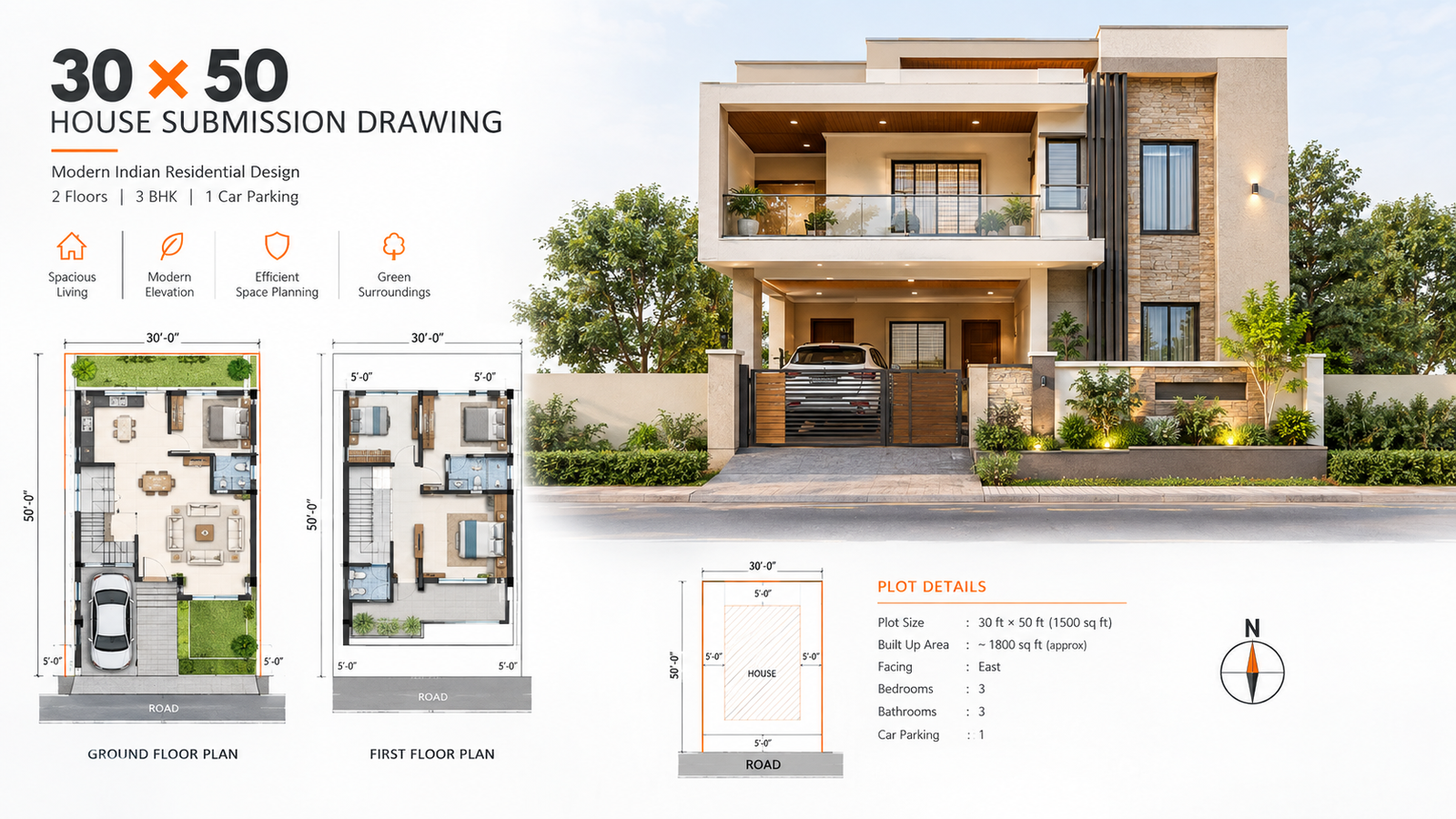
A 30×50 house is one of the most common residential plot sizes in India. Whether you are planning a modern single-floor home, a duplex, or a G+1 house, you cannot begin construction legally in most cities without an approved submission drawing. Many homeowners believe that a submission drawing is just a simple floor plan, but in reality it is a complete set of architectural drawings prepared according to municipal building bylaws.
A properly prepared 30×50 house submission drawing helps the local municipal corporation or development authority verify that your proposed building follows rules related to setbacks, height, ground coverage, floor area ratio (FAR), ventilation, parking, staircase dimensions, and safety requirements. Once the drawing is approved, you receive permission to start construction.
This guide explains everything about a 30×50 house submission drawing in simple human language, including required drawings, approval process, documents, common mistakes, and important design considerations. The content is written in an original, practical style so homeowners, architects, civil engineers, and architecture students can understand the complete process.
What is a 30×50 House Submission Drawing?
A 30×50 house submission drawing is a complete architectural drawing set prepared for a residential plot measuring 30 feet by 50 feet, which equals 1500 square feet or approximately 139 square metres.
This drawing is submitted to the local municipal authority before construction begins. It contains all technical information needed for building approval, including site dimensions, building layout, elevations, sections, parking details, drainage, water supply, septic tank or sewer connection, and other construction information required by local regulations.
The purpose of a submission drawing is not only to show the design of the house but also to prove that the proposed building follows government construction rules.
National Building Code of India (NBC 2016) — Building approval rules, setbacks, FAR, ventilation, and general building requirements
Why is a Submission Drawing Required Before Construction?
Building approval protects both homeowners and local authorities. Without approval, construction may be considered unauthorized, resulting in penalties or legal notices.
A submission drawing helps authorities verify:
Plot ownership and dimensions.
Road width and building alignment.
Required front, rear, and side setbacks.
Building height within permissible limits.
Floor Area Ratio (FAR) compliance.
Ground coverage percentage.
Parking provision.
Natural light and ventilation.
Staircase safety.
Water supply and drainage connections.
Once everything satisfies local bylaws, the authority grants building permission.
Before starting construction, homeowners should understand the building plan approval rules and bye-laws applicable to their location.
Standard Size of a 30×50 Residential Plot
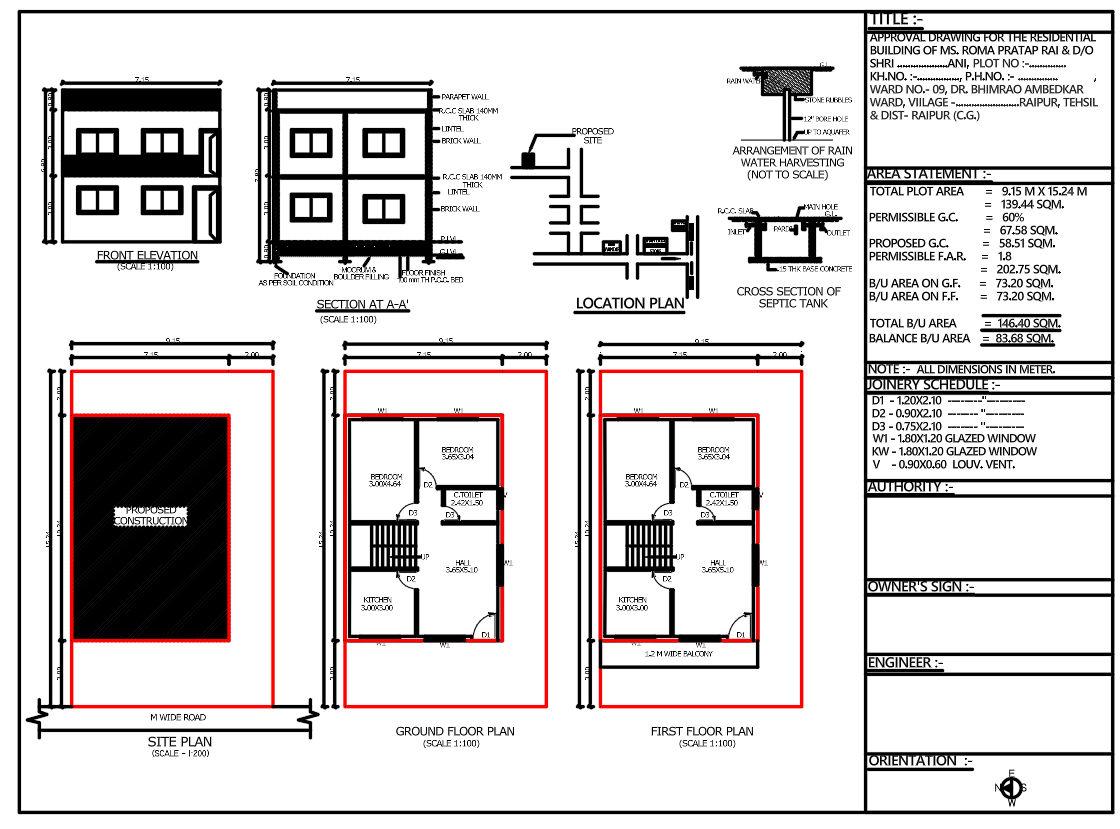
A 30×50 residential plot offers enough space for comfortable family living. Architects usually divide the plot into built-up and open areas according to local development rules.
Typical plot information includes:
Plot Width: 30 feet.
Plot Length: 50 feet.
Total Plot Area: 1500 sq ft.
Approximate Area in Square Metres: 139 sq m.
Depending on city regulations, the actual construction area changes after leaving mandatory setbacks around the building.
Understanding Setbacks in a 30×50 House Plan
Setbacks are open spaces left around the building for ventilation, safety, fire access, maintenance, and sunlight.
The exact setback requirements vary from city to city, but generally residential plots include:
Front Setback
The front setback provides space between the building and the road.
It is commonly used for:
Parking.
Garden.
Entrance steps.
Landscape.
Rainwater harvesting access.
Rear Setback
The rear setback improves ventilation and provides service access for plumbing and drainage.
Side Setbacks
Side setbacks improve airflow between neighboring buildings and allow natural light into bedrooms and kitchens.
Every municipal authority has different setback requirements depending on road width, plot size, and building category.
Standardized Development & Building Regulations (MoHUA/BIS) — Development control rules, building regulations, and planning guidelines.
What Drawings Are Included in a 30×50 House Submission Drawing Set?
A complete submission drawing includes multiple architectural and service drawings instead of just one floor plan.
Site Plan
The site plan shows the entire plot along with nearby roads and surrounding properties.
It generally includes:
Plot boundaries.
North direction.
Road location.
Building footprint.
Setbacks.
Parking area.
Compound wall.
Entry gate.
Water tank.
Septic tank or sewer line.
Rainwater harvesting pit.
The site plan is one of the most important drawings for approval.
Floor Plan
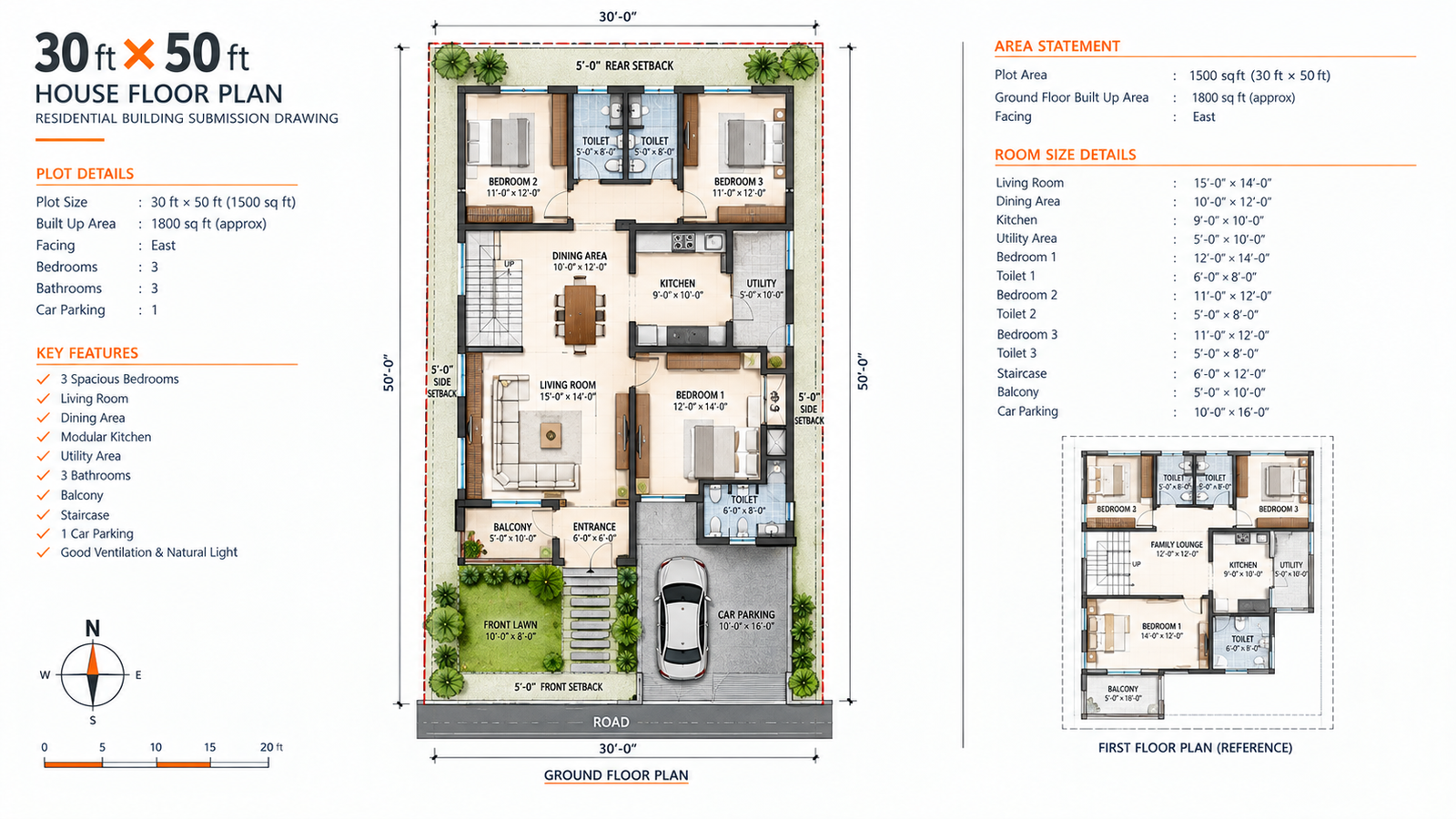
The floor plan explains room arrangements and dimensions.
It includes:
Living room.
Dining room.
Kitchen.
Bedrooms.
Bathrooms.
Staircase.
Balcony.
Utility area.
Door and window locations.
Room dimensions.
Wall thickness.
Authorities verify room sizes and ventilation through this drawing.
Elevation Drawing
Elevation shows the exterior appearance of the building.
It includes:
Front elevation.
Building height.
Window placement.
Balcony design.
Roof profile.
Architectural finishes.
Municipal authorities verify overall building height from elevation drawings.
Section Drawing
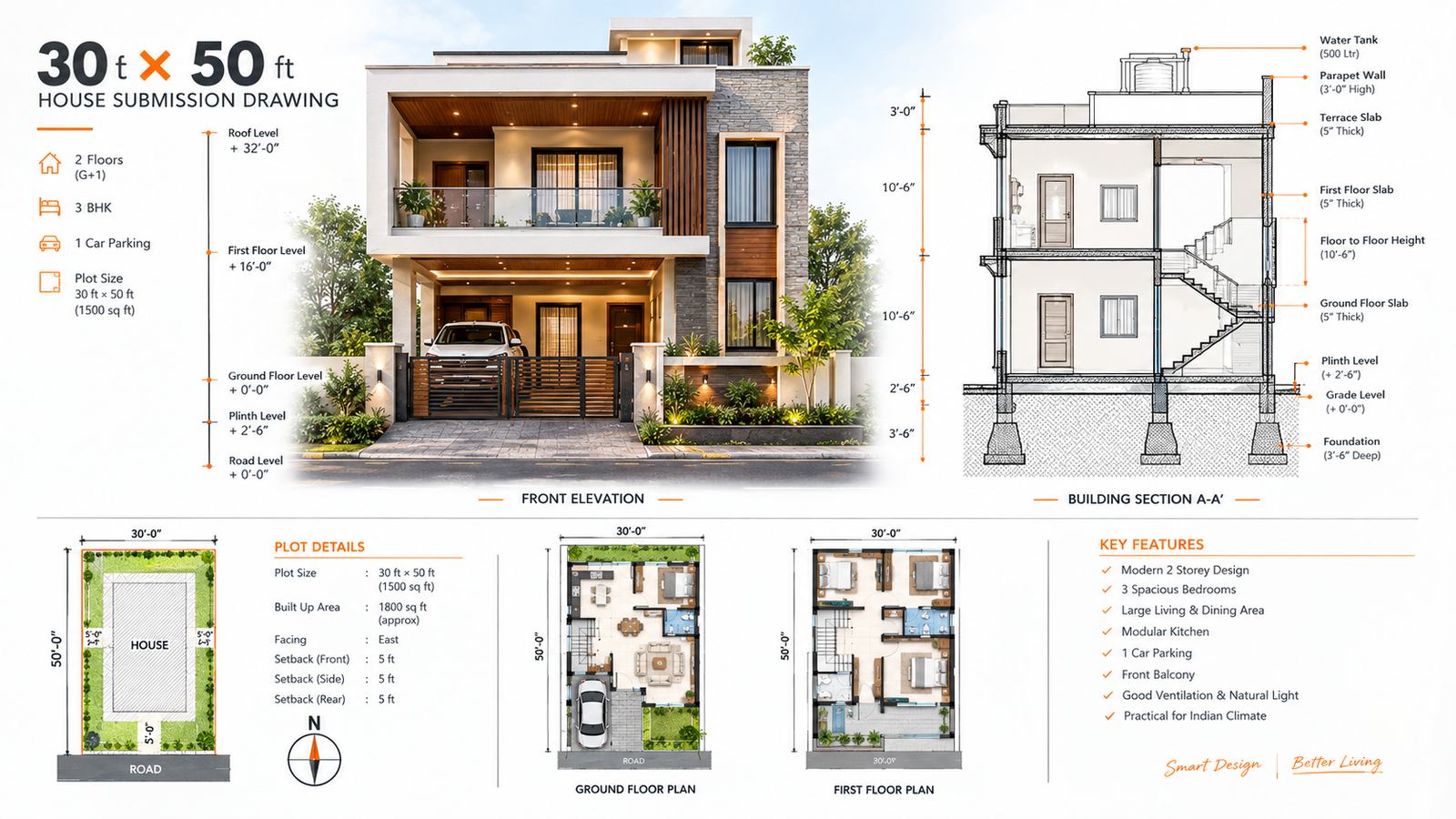
The section drawing represents a vertical cut through the building.
It explains:
Foundation level.
Plinth height.
Floor height.
Staircase rise and tread.
Roof slab.
Water tank level.
Structural height information.
Sections help authorities understand the building’s vertical dimensions.
A properly prepared section drawing for building submission helps explain floor levels, plinth, slab, roof and overall building height.
Roof Plan
The roof plan shows:
Terrace layout.
Staircase headroom.
Solar panel space.
Water tank position.
Rainwater pipe locations.
Parapet wall.
Parking Layout
Parking layout shows vehicle movement and parking dimensions.
It indicates:
Car parking.
Bike parking.
Entry slope.
Turning radius.
Important Information Mentioned in Submission Drawings
Every submission drawing contains detailed project information.
Important details include:
Owner name.
Plot number.
Survey number.
Location.
Ward number.
Plot dimensions.
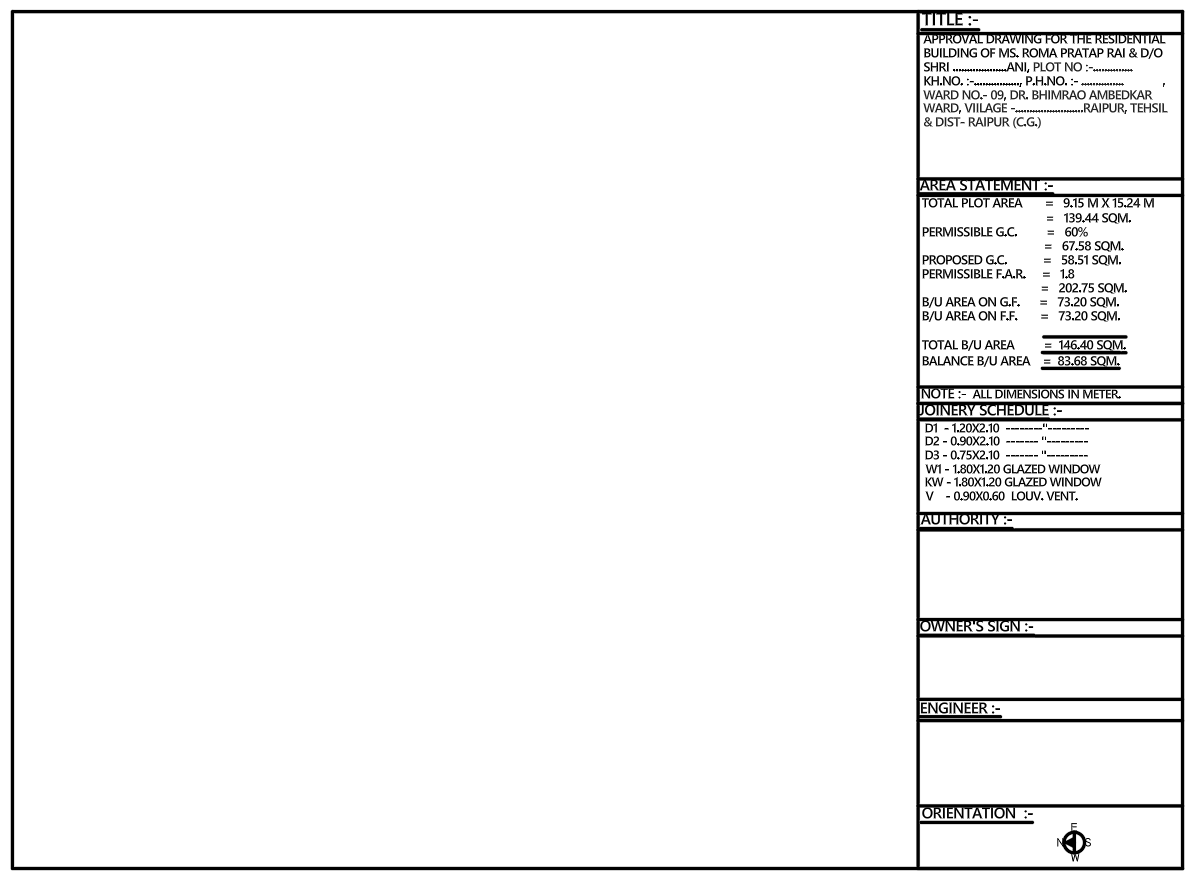
Total plot area.
Built-up area.
Floor-wise area statement.
FAR calculation.
Ground coverage calculation.
Architect details.
Registration number of architect or engineer.
These details help authorities identify the project correctly.
Floor Area Ratio (FAR) in a 30×50 Plot
Floor Area Ratio is one of the most important calculations during building approval.
FAR determines how much total floor area can be constructed on a plot.
For example, if local bylaws allow a particular FAR, the architect calculates maximum permissible construction accordingly.
The calculation depends on:
Plot size.
Road width.
Residential zone.
Local development authority rules.
Building category.
Always verify FAR with your municipal authority before designing multiple floors.
Ground Coverage Calculation
Ground coverage refers to the portion of the plot occupied by the building on the ground floor.
Open spaces like setbacks, gardens, and parking remain outside ground coverage.
Authorities verify that sufficient open space remains for:
Ventilation.
Light.
Drainage.
Emergency access.
Exceeding permissible ground coverage may result in drawing rejection.
Room Planning for a 30×50 House
A well-designed 30×50 home balances comfort, ventilation, privacy, and circulation.
Before finalizing the room arrangement, homeowners can explore different modern house plans to understand practical space planning.
Living Room Planning
The living room is generally located near the entrance.
Good planning includes:
Natural light.
Cross ventilation.
Comfortable furniture circulation.
Connection with dining.
Kitchen Planning
Modern kitchens are planned close to dining spaces.
The drawing should include:
Cooking platform.
Sink.
Refrigerator space.
Window ventilation.
Utility connection.
Bedroom Planning
Bedrooms should provide privacy and proper ventilation.
Submission drawings indicate:
Bed position.
Wardrobe space.
Window opening.
Attached or common bathroom access.
Bathroom Planning
Bathrooms require:
Ventilation window.
Plumbing shaft.
Floor slope.
Drainage outlet.
Authorities verify sanitary layout during approval.
Staircase Planning
If future floors are planned, staircase location becomes very important.
Submission drawings include:
Stair width.
Rise.
Tread.
Landing.
Headroom clearance.
Direction of movement.
Ventilation Requirements in Residential Submission Drawings
Ventilation is mandatory in residential building approval.
Architects provide:
Windows in habitable rooms.
Exhaust openings in bathrooms.
Kitchen ventilation.
Open-to-sky spaces where required.
Air circulation through setbacks.
Proper ventilation improves indoor comfort and satisfies municipal regulations.
Natural Lighting Considerations
Submission drawings ensure every major room receives daylight.
Good daylight planning includes:
Large windows.
Courtyard where applicable.
Balcony openings.
Ventilation shafts.
Skylights if permitted.
Authorities may reject designs with insufficient lighting provisions.
Water Supply Layout
Water supply drawings show how fresh water enters the building.
The layout generally includes:
Municipal water connection.
Underground water tank.
Pump location.
Overhead tank.
Distribution pipelines.
This ensures adequate water supply throughout the building.
Drainage Layout
Drainage drawings explain wastewater disposal.
Typical elements include:
Soil pipe.
Waste pipe.
Rainwater pipe.
Inspection chamber.
Sewer connection.
Septic tank if sewer is unavailable.
Proper drainage prevents future plumbing problems.
Rainwater Harvesting in Submission Drawings
Many Indian cities require rainwater harvesting for building approval.
The drawing may include:
Harvesting pit.
Recharge well.
Filter chamber.
Roof water collection pipes.
Overflow arrangement.
Rainwater harvesting also supports groundwater recharge.
Septic Tank or Sewer Connection Details
Depending on municipal infrastructure:
Sewer-connected areas show municipal sewer connection.
Rural or developing areas include septic tank and soak pit layout.
Authorities verify sanitation arrangements before approval.
Electrical Layout in Building Submission
Some authorities require basic electrical planning.
The layout may indicate:
Meter position.
Main distribution board.
Switchboard locations.
Lighting points.
Fan points.
Power outlets.
Electrical safety planning improves construction quality.
Structural Notes Included in Submission Drawings
Submission drawings often include structural notes for reference.
These mention:
Foundation type.
RCC slab.
Beam and column system.
Concrete grade.
Steel grade.
Earthquake-resistant design recommendation.
Detailed structural drawings are usually prepared separately after approval.
Bureau of Indian Standards (BIS) — Official source for Indian building standards and codes.
Documents Required for 30×50 House Plan Approval
The submission drawing is accompanied by supporting documents.
Common documents include:
Ownership proof.
Sale deed.
Property tax receipt.
Latest land records.
Identity proof.
Address proof.
Site photographs where required.
Architect’s registration certificate.
Structural stability certificate if applicable.
Application form.
Requirements differ across states and municipal authorities.
Step-by-Step Building Plan Approval Process
The approval process generally follows similar stages across India.
Model Building Bye-Laws / Building Approval Guidelines (MoHUA) — Building permission process and structural safety guidelines for urban local bodies.
Step 1 — Site Measurement
The architect measures the plot and verifies boundaries.
Step 2 — Prepare Concept Plan
Room arrangement and setbacks are finalized.
Step 3 — Prepare Submission Drawing Set
Complete architectural drawings are prepared according to bylaws.
Step 4 — Calculate FAR and Ground Coverage
Area statements are prepared carefully.
Step 5 — Submit Documents
Application and drawings are uploaded or submitted physically.
Step 6 — Municipal Verification
Officials verify documents and technical compliance.
Step 7 — Corrections if Required
Architect updates drawings if objections are raised.
Step 8 — Building Permission Issued
Construction begins after receiving approval.
Online Building Plan Approval in India
Many municipal corporations now provide online approval systems.
The process usually includes:
User registration.
Property details entry.
Drawing upload.
Document upload.
Fee payment.
Objection tracking.
Approval download.
Online systems reduce approval time in many cities.
Typical Timeline for Approval
Approval time depends on:
Municipal workload.
Drawing accuracy.
Plot category.
Missing documents.
Local regulations.
Simple residential projects may receive approval faster than larger developments.
Common Reasons Submission Drawings Get Rejected
Drawing rejection is common when bylaws are ignored.
Common mistakes include:
Incorrect setbacks.
FAR calculation errors.
Excess ground coverage.
Missing parking.
Missing north direction.
Incorrect plot dimensions.
Incomplete area statement.
Missing architect signature.
Poor drainage planning.
Missing rainwater harvesting details where mandatory.
Correcting these issues improves approval chances.
Tips to Prepare an Approval-Friendly 30×50 House Drawing
A professional submission drawing should always:
Follow local municipal bylaws.
Use accurate dimensions.
Maintain proper scale.
Include complete annotations.
Show all mandatory setbacks.
Provide area calculations.
Include service layouts.
Maintain readable text and line weights.
A clear drawing reduces objections during scrutiny.
Single-Floor vs G+1 Submission Drawing
A 30×50 plot can support different building types depending on bylaws.
Single-Floor House
Suitable for:
Small families.
Senior citizens.
Budget construction.
Future expansion planning.
G+1 House
Suitable for:
Larger families.
Rental income.
Duplex planning.
Separate family floors.
G+1 submission drawings include staircase continuity and first-floor planning.
If you are planning an additional floor, you can also understand the requirements of a G+1 house submission drawing before finalizing the design.
Duplex House Submission Drawing on a 30×50 Plot
A duplex drawing usually contains:
Double-height spaces where applicable.
Internal staircase.
Master bedroom upstairs.
Balcony layouts.
Terrace access.
Utility spaces.
Area calculations remain important for approval.
Parking Planning in a 30×50 Plot
Parking is mandatory in many residential bylaws.
Good parking planning includes:
Comfortable car entry.
Gate alignment.
Turning space.
Two-wheeler parking.
Visitor movement.
Rainwater drainage slope.
Proper parking improves usability and approval compliance.
Boundary Wall and Gate Details
Submission drawings often include compound wall information.
Typical details include:
Wall location.
Gate width.
Pedestrian gate.
Vehicle gate.
Entrance steps.
Authorities verify encroachment on public roads.
Plinth Height in Submission Drawings
Plinth height is the height between natural ground level and finished floor level.
A proper plinth:
Protects against waterlogging.
Improves drainage.
Prevents dampness.
Supports long-term durability.
Plinth level appears in section drawings.
Staircase Design Rules for Approval
A staircase should provide safe movement.
Important planning includes:
Comfortable tread.
Uniform riser height.
Landing after required steps.
Adequate headroom.
Handrail provision.
Authorities may verify staircase dimensions in G+1 drawings.
Balcony Planning in a 30×50 House
Balconies improve ventilation and outdoor usability.
Design considerations include:
Width.
Railing height.
Water drainage slope.
Connection with bedrooms or living room.
Projection limits according to bylaws.
Utility Area Planning
Modern homes include utility spaces for daily work.
A utility area may contain:
Washing machine.
Sink.
Storage.
Drying space.
Plumbing connections.
Proper planning keeps the kitchen uncluttered.
Terrace Planning in Submission Drawings
The terrace drawing includes:
Staircase access.
Water tank.
Solar water heater.
Solar panels.
Parapet wall.
Rainwater outlets.
This helps service planning during construction.
Safety Requirements in Residential Drawings
Municipal authorities encourage safe residential planning.
Safety features include:
Proper staircase.
Ventilation.
Fire escape where required.
Electrical meter accessibility.
Structural stability.
Drainage safety.
Good planning reduces future maintenance issues.
Vastu Considerations While Preparing Submission Drawings
Many homeowners request Vastu-friendly planning along with municipal compliance.
Common preferences include:
Entrance placement.
Kitchen direction.
Pooja room location.
Bedroom orientation.
Staircase position.
Water tank placement.
These preferences should still comply with building bylaws.
If Vastu is part of your planning requirements, you can learn more about Vastu Shastra for home planning before finalizing room positions.
Construction Notes Mentioned in Submission Drawings
Architects often include general construction notes.
Examples include:
All dimensions to be verified at site.
Do not scale drawings.
Follow structural drawings during construction.
Materials should comply with applicable standards.
Any site variation should be approved before execution.
These notes reduce construction confusion.
When preparing submission drawings digitally, following proper AutoCAD layer standards makes the drawing easier to read and edit.
Importance of Working with a Licensed Architect or Engineer
A licensed professional understands:
Municipal bylaws.
FAR calculations.
Setback rules.
Approval documentation.
Drawing standards.
Revision procedures.
Professional drawings reduce delays and approval objections.
Cost Factors for Preparing a 30×50 Submission Drawing
The drawing cost depends on:
Plot location.
City regulations.
Number of floors.
Architectural complexity.
Service drawings required.
Structural coordination.
Municipal submission requirements.
Different cities have different professional fee structures.
Can You Modify a Submission Drawing After Approval?
Yes, but significant design changes usually require revised approval.
Revisions may be needed for:
Additional floor.
Balcony extension.
Staircase relocation.
Parking changes.
Room layout modification.
Elevation changes affecting bylaws.
Always obtain approval before making major construction changes.
Best Practices Before Starting Construction
Before construction begins:
Verify plot measurements.
Check approval conditions.
Match drawings with site layout.
Confirm column locations with structural drawings.
Verify drainage slope.
Confirm water connection points.
Preserve approved drawing copies for site reference.
This helps avoid construction errors and future legal issues.
Conclusion
A 30×50 house submission drawing is much more than a simple house plan. It is a complete technical document prepared according to municipal building regulations for obtaining legal construction permission. A well-prepared submission drawing includes accurate plot measurements, setbacks, floor plans, elevations, sections, parking, drainage, water supply, and area calculations that comply with local bylaws.
Preparing the drawing carefully before submission saves time, reduces objections, and helps homeowners begin construction with proper approval. Whether you are building a single-floor home, a duplex, or a G+1 residence, an accurate submission drawing is the first and most important step toward a legally approved residential project.
Frequently Asked Questions
Is a submission drawing mandatory for a 30×50 house in India?
Yes. In most municipalities and development authorities, building approval is required before starting residential construction on a 30×50 plot.
Does a submission drawing include structural drawings?
No. Submission drawings are mainly architectural approval drawings. Structural drawings are usually prepared separately for construction.
Can I build a G+1 house on a 30×50 plot?
Yes, if local building bylaws, FAR limits, setbacks, and height regulations permit G+1 construction.
What is included in a complete 30×50 house submission drawing set?
A complete set generally includes a site plan, floor plan, elevation, section, roof plan, parking layout, area statement, setbacks, drainage layout, water supply layout, and other municipal approval notes.
Why do municipal authorities reject residential submission drawings?
Common reasons include incorrect setbacks, FAR calculation mistakes, missing parking space, incomplete area statements, incorrect dimensions, or non-compliance with local building bylaws.
Can I submit a house plan online for approval?
Yes. Many municipal corporations and development authorities in India provide online portals where architects upload submission drawings and supporting documents for approval.
Can I change the main entrance after the house is built?
Changing the main entrance may involve structural considerations and approval requirements. Consult a qualified architect or structural professional before making any structural changes.
Is Vastu essential for a house plan?
Vastu is a traditional planning method and does not replace local building regulations, structural design standards, or safety requirements. Adhere to applicable municipal and building codes when planning or modifying a house.