
Staircase Design and Section Details (B-B’) – A Complete Guide for Residential Buildings
Introduction
Designing a staircase is a crucial aspect of any residential building. A well-planned staircase ensures safe circulation, efficient space utilization, and the structural integrity of the building. In this post, we will analyze the design of a ‘dog-legged’ staircase—including its plan and section (B-B’)—along with all the essential construction-related details.
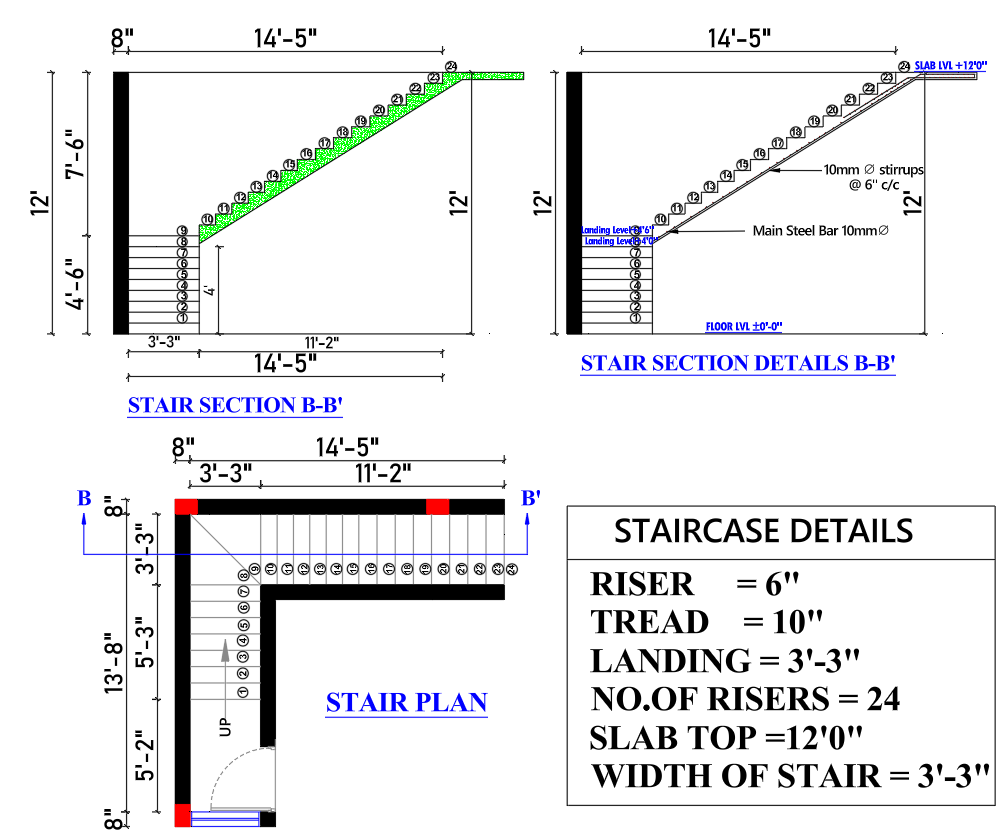
📌 Overview of the Staircase Drawing
The accompanying drawing includes the following details:
- Plan View of the Staircase
- Section B-B’ of the Staircase
- Reinforcement (Rebar) Details
- Dimensional Specifications
This type of Staircase Design is commonly used in residential buildings due to its compact layout and efficient utilization of space.
Staircase Plan Interpretation
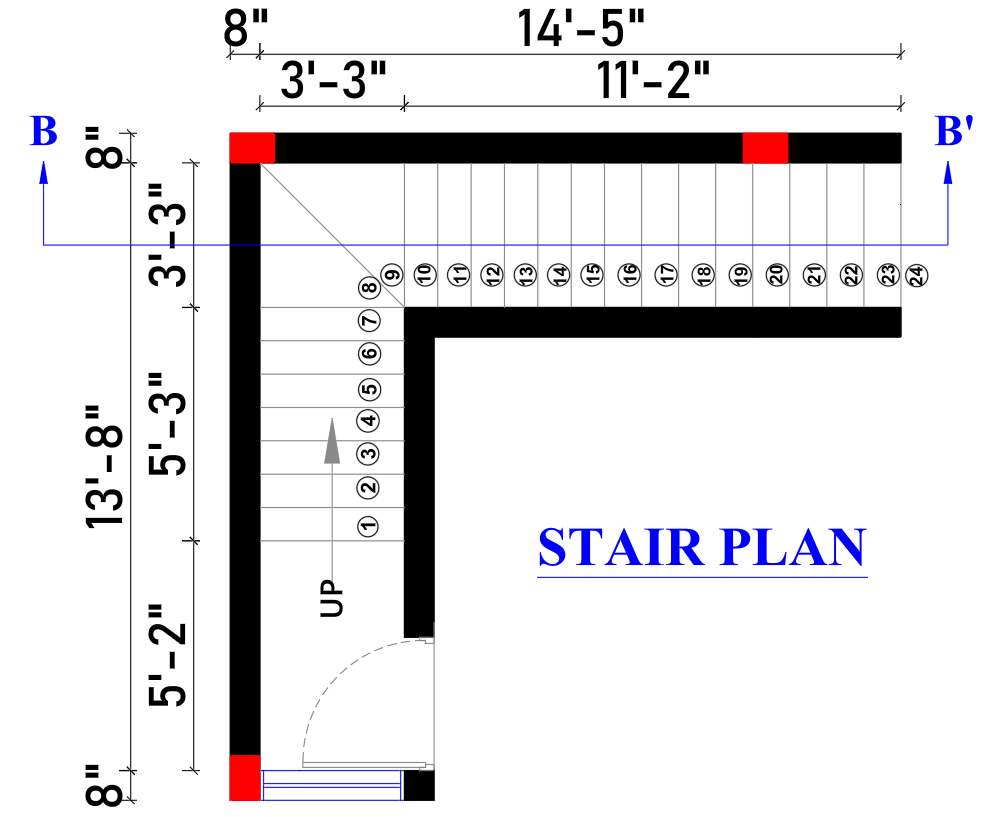
This plan illustrates a ‘dog-legged’ staircase, featuring two ‘flights’ (sections of stairs) running in opposite directions, separated by a central ‘landing’.
Key Features:
- The first flight begins at ground level and ascends to the landing.
- The landing serves as a resting area and provides an opportunity to change direction.
- The second flight continues upward to the next floor.
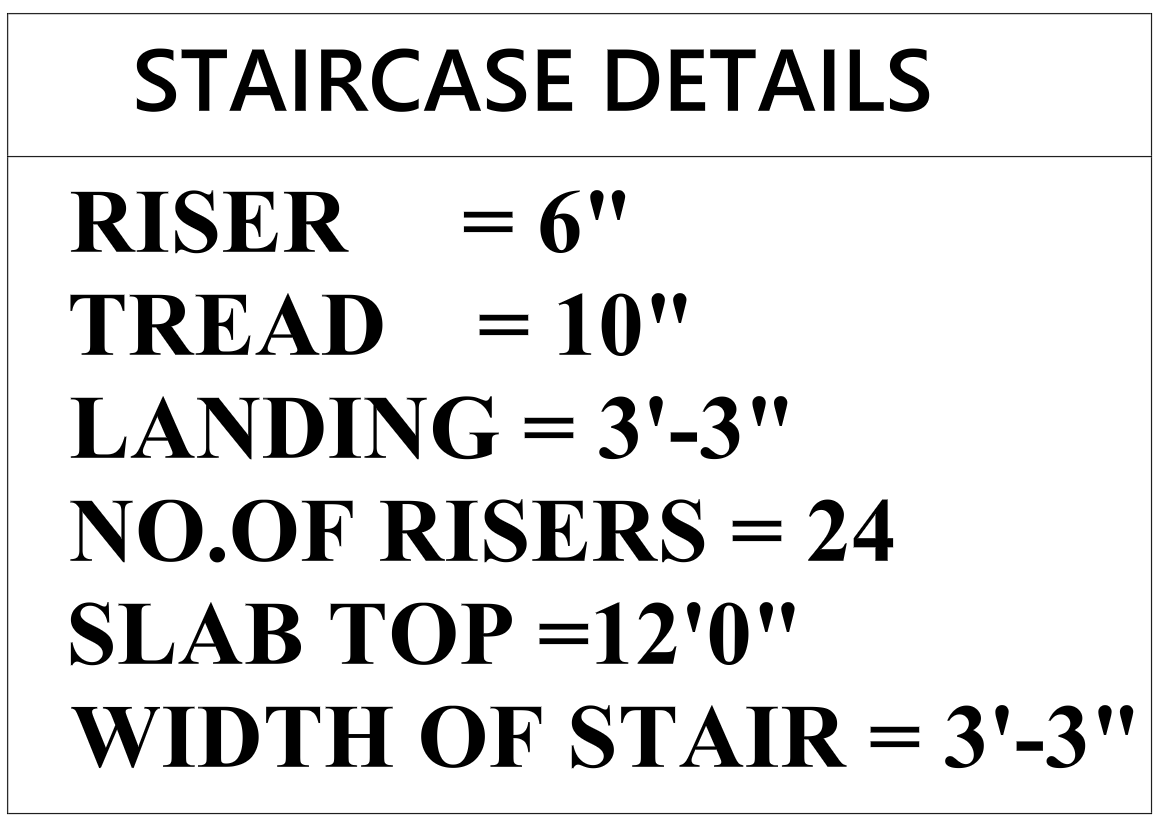
- The total width of the staircase is 3’-3”, which is ideal for residential use.
Advantages:
- Saves space compared to straight staircases.
- Maintains privacy between floors.
- Easy to construct.
Staircase Section B-B’ – Explanation
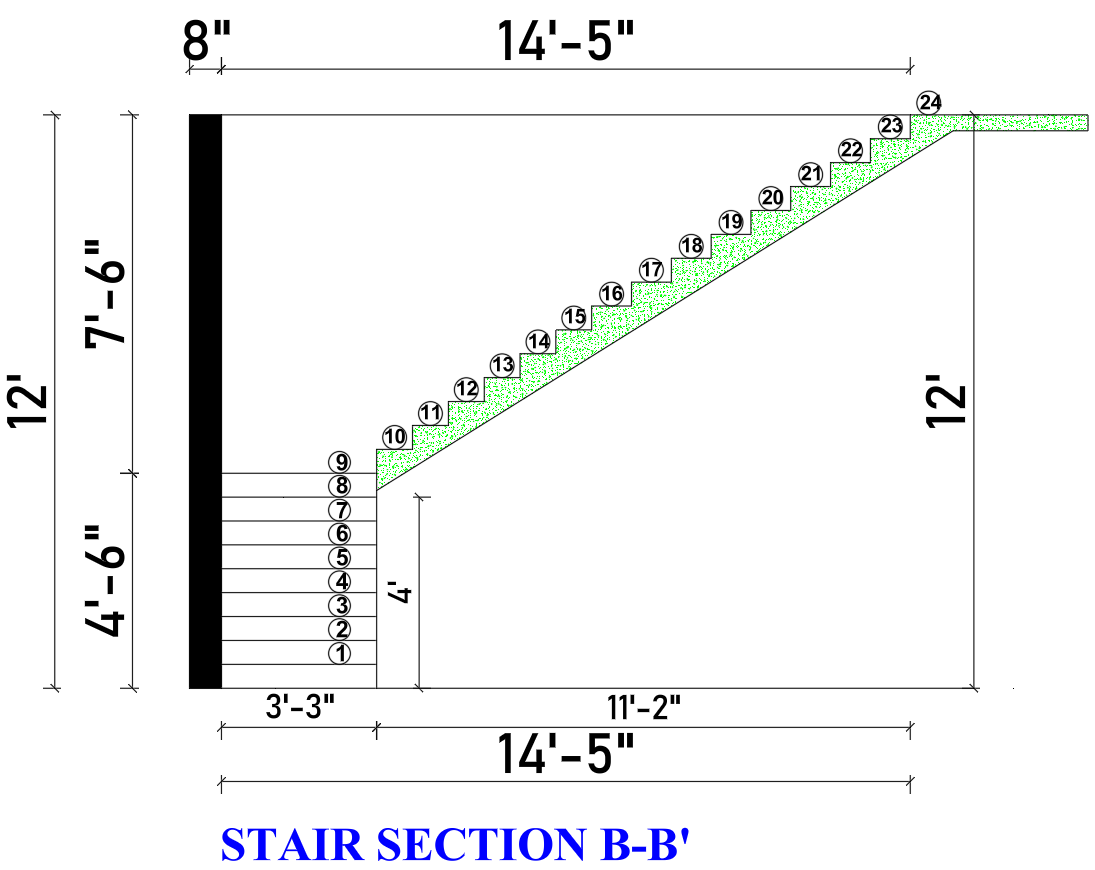
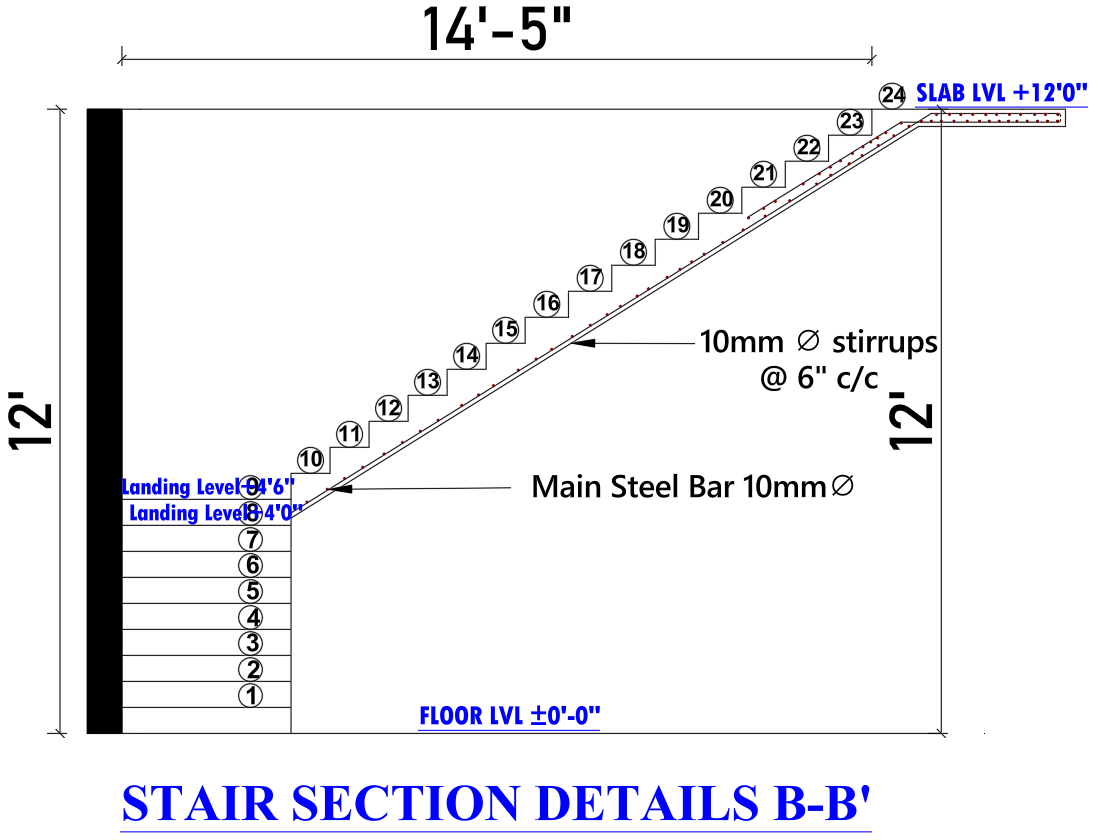
This section presents a vertical view of the Staircase Design.
Key Observations:
- Total Height Covered = 12 feet
- Number of Risers = 24
- Each Riser = 6 inches
- Each Tread = 10 inches
👉 This adheres to standard ergonomic design principles:
A comfortable slope for walking
A safe height for the stair treads
Staircase Design Formula (The Rule of Comfort)
A commonly used formula in Staircase Design:
👉 2R + T = 24” to 26”
2R + T = 24 to 26
2R + T = 24 to 26
Where:
R = Riser Height
T = Tread Width
For this design:
2 × 6 + 10 = 22 inches (slightly on the lower side, but still acceptable for residential buildings)
Structural Reinforcement Details
This section also illustrates the reinforcement details:
Steel Reinforcement:
- Main bars: 10 mm diameter
- Stirrups: 10 mm diameter @ 6” spacing
Key Structural Points:
- The sloping slab (waist slab) supports the stairs.
- The reinforcement follows the slope of the stairs.
- Proper anchorage at the landings and slabs is mandatory.
Landing Details
- Landing Width = 3’-3”
- It serves as a transition platform between two flights of stairs.
- It provides safety and comfort.
Essential Design Considerations
When designing stairs, always keep the following points in mind:
1. Comfort and Safety
- Riser: 5” to 7”
- Tread: 9” to 11”
2. Efficient Space Utilization
For areas with limited space, use dog-legged or L-shaped stairs.
3. Structural Integrity
- Proper reinforcement design
- Ensure adequate slab thickness
4. Building Codes
- Adhere to local municipal guidelines
- Maintain minimum headroom (typically 7 feet)
Why is this staircase design the best?
✔ Compact and space-saving
✔ Comfortable stair dimensions
✔ Easy to build
✔ Suitable for small to medium-sized homes
Common Mistakes to Avoid
❌ Too high riser (uncomfortable)
❌ Too narrow tread (unsafe)
❌ Improper reinforcement
❌ Insufficient headroom
❌ No landing in long stairs
👉 These mistakes can lead to unsafe and non-compliant designs.
Construction Tips for Staircase
- Use M20 grade concrete for durability
- Ensure proper cover to reinforcement (20–25 mm)
- Provide anti-slip finish on treads
- Maintain proper curing (7–14 days)
- Check alignment before concreting
Pro Tips for Architects & Engineers
✔ Always follow 2R + T rule for comfort
✔ Optimize space using dog-legged layout
✔ Use 3D visualization in AutoCAD/Revit
✔ Coordinate with structural drawings before execution
✔ Ensure proper lighting and ventilation
📌 Conclusion
This staircase design—complete with a plan and Section B-B’—serves as an excellent example of a practical residential staircase. It strikes a balance between comfort, safety, and efficient space utilization, making it perfectly suited for modern homes.
If you are a civil engineer, architect, or AutoCAD designer, understanding such detailed drawings will empower you to create superior and more functional designs.
6 inches is considered comfortable and safe.
A staircase with two parallel flights in opposite directions separated by a landing.
It provides rest and improves safety while changing direction.
3 feet is minimum, but 3’-3” is better for comfort.