
Building Submission Drawing Checklist Before Final Submission
Preparing a building submission drawing requires more than completing a floor plan and adding dimensions. Before sending a drawing package to the concerned authority, every sheet should be reviewed for accuracy, consistency and compliance with the applicable local building regulations.
Even a well-designed residential plan can receive objections if the plot dimensions differ between drawings, the area statement contains calculation errors, or important information is missing. A systematic pre-submission review helps identify these issues before the application is filed.
This building submission drawing checklist is intended for architects, civil engineers, CAD draftsmen and homeowners who want to review their building plan package before submission. It focuses on practical verification rather than explaining how to create each drawing.
1. Verify the Project and Plot Information
Start by checking the basic information used throughout the drawing set. Errors in the project details can create confusion during technical scrutiny.
Check the following:
- Owner or applicant name is entered correctly.
- Project address and plot identification are consistent.
- Plot dimensions match the available property records and verified site measurements.
- Road location and width are recorded correctly.
- Drawing numbers and revision dates are updated.
- The drawing scale and measurement units are clearly identified.
Practical check: Compare the project information on the title block with the application details. Correct any spelling differences, incorrect plot numbers or outdated drawing references before proceeding.
If you want to understand the purpose and main components of these drawings, read our guide on what is a submission drawing before reviewing your drawing set.
2. Check the Plot Boundary and Site Plan
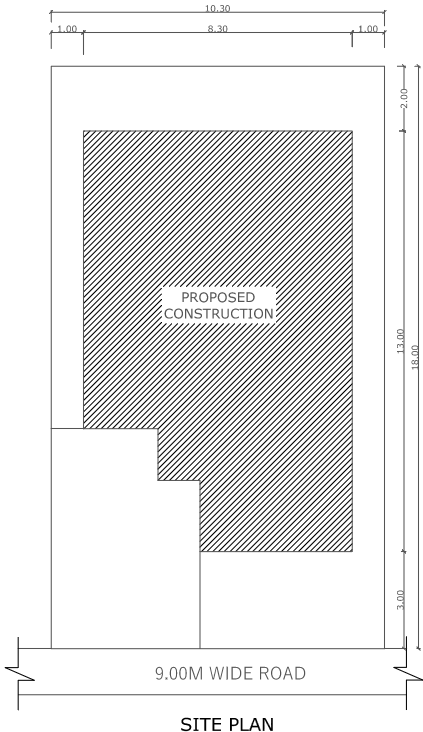
The site plan should accurately represent the plot and the proposed building position. Review it against the available site survey, property documents and applicable planning requirements.
Verify that:
- All plot sides are dimensioned.
- The north direction is indicated.
- The adjoining road and access point are identified.
- The proposed building footprint is correctly positioned.
- Required front, rear and side setbacks are marked.
- Existing structures are shown where relevant.
- Parking and access arrangements are clearly represented.
- Any required drainage or utility information is included.
Do not assume that a plot’s stated area automatically confirms its boundary dimensions. Where necessary, resolve discrepancies using verified survey information before finalizing the drawing.
3. Review Setbacks and Open Spaces
Setback errors can lead to objections even when the internal floor plan is well designed.
Check the distance between the proposed building and the relevant plot boundaries. Review projections, balconies, external stairs, covered areas and other features against the rules applicable to the project.
Confirm that:
- Each required setback is dimensioned.
- The building footprint remains within the permissible development area.
- Open spaces are calculated using the correct boundary references.
- Any permitted projections are treated according to the applicable rules.
- The site plan and floor plans show consistent building positions.
Important: Setback requirements are not identical in every city or for every plot. Confirm the applicable local building bye-laws instead of relying on a universal setback value.
Building setbacks and open-space requirements should be checked against the applicable local building bye-laws and relevant provisions of the National Building Code of India, wherever adopted by the concerned authority.
4. Cross-Check All Floor Plans
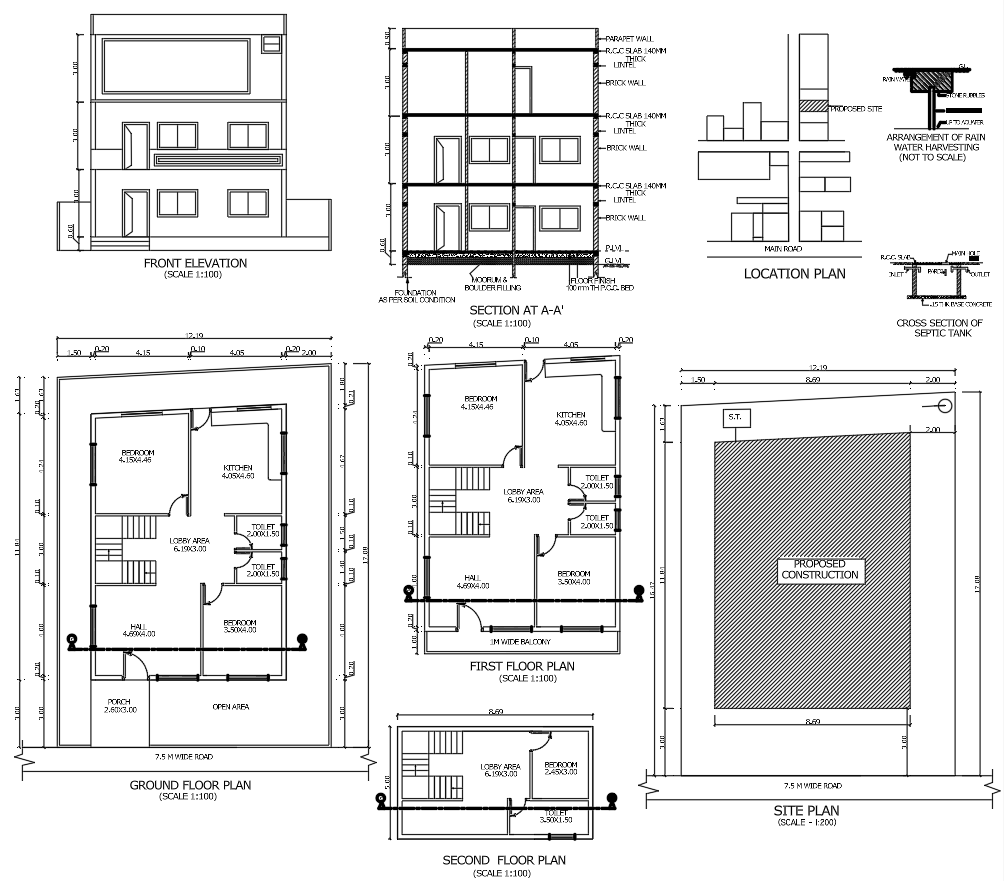
Review every proposed floor individually, then compare the floors with one another.
For each floor plan, check:
- Room names and dimensions.
- Wall thicknesses and wall positions.
- Door and window locations.
- Staircase position and layout.
- Kitchen, toilet and ventilation arrangements.
- Balconies, utility spaces and projections.
- Floor labels and drawing references.
- Dimensions needed to understand the proposed layout.
Pay particular attention to areas where walls, stairs and openings change between floors. An unexplained difference may indicate a drafting error or a design change that has not been coordinated.
5. Compare Plans, Elevations and Sections
Before submission, check that all drawings represent the same building correctly.
- Confirm that door and window positions match between floor plans and elevations.
- Check that floor levels, ceiling heights and overall building height agree with the section drawing.
- Verify that the staircase, roof, balconies and other projections are shown consistently.
- Ensure that section-cut lines and drawing references point to the correct views.
- Correct any differences in dimensions or building details before finalizing the drawings.
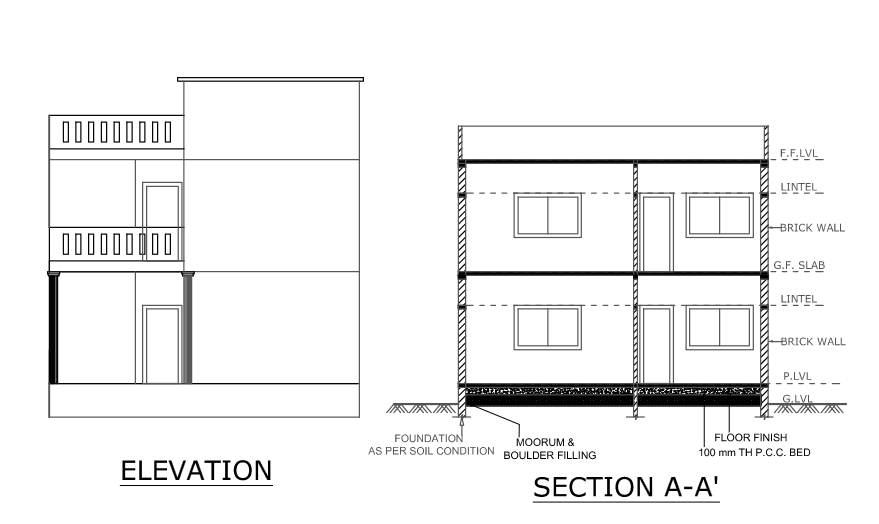
6. Verify Building Height and Floor Levels
Incorrect height information can make it difficult to verify the proposed building against local regulations.
Review the elevation and section drawings for:
- Natural ground level, where required.
- Plinth level.
- Finished floor levels.
- Floor-to-floor heights.
- Terrace or roof level.
- Parapet height.
- Staircase headroom and roof access, where applicable.
- Overall building height measured using the relevant local definition.
Check that the vertical dimensions add up correctly. Also verify whether the authority measures building height from a particular ground level or reference datum.
Do not rely on the visual appearance of an elevation alone; use the actual dimensions and levels.
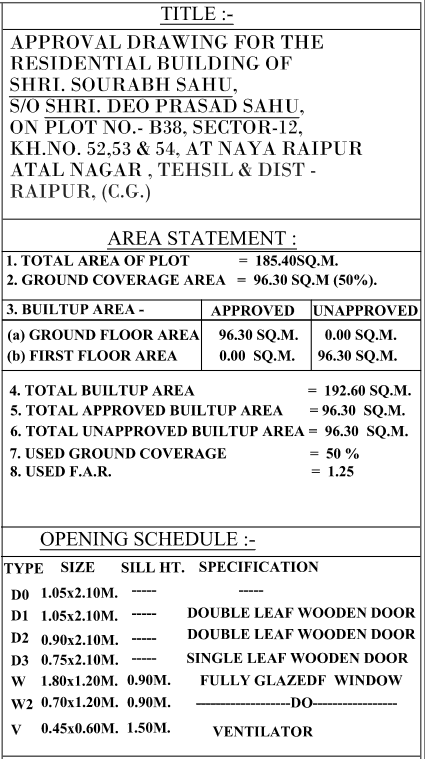
7. Recalculate the Area Statement
The area statement should be checked independently rather than copied from an earlier drawing or project file.
Review these calculations as applicable:
- Plot area.
- Floor-wise built-up area.
- Total built-up area.
- Ground coverage.
- Floor Area Ratio (FAR) or Floor Space Index (FSI).
- Permissible and proposed development areas.
- Parking calculations, where required.
For a basic FAR calculation:
FAR = Total counted floor area ÷ Plot area
For example, if the applicable counted floor area is 1,200 sq ft and the plot area is 1,500 sq ft, the FAR is 0.80.
This is only a mathematical example. The floor area counted for regulatory purposes may differ from the gross built-up area because local rules determine which areas are included or excluded.
Confirm the calculation method and permissible limits applicable to the project. Make sure the figures in the area statement agree with the drawings.
8. Review Parking and Access Arrangements
Parking should be checked as a functional layout, not merely as a rectangle marked on the site plan.
Verify:
- The proposed parking space has the required dimensions.
- Vehicle entry and exit are practical.
- Access does not conflict with stairs, columns, walls or other fixed elements.
- Required circulation space is available.
- Parking calculations agree with the submitted area or compliance statement, where applicable.
- The arrangement follows the local parking requirements.
Where a vehicle turning movement is important, review whether the shown layout is practical for the intended vehicle rather than relying only on a labelled parking bay.
9. Check Drainage and Building Services
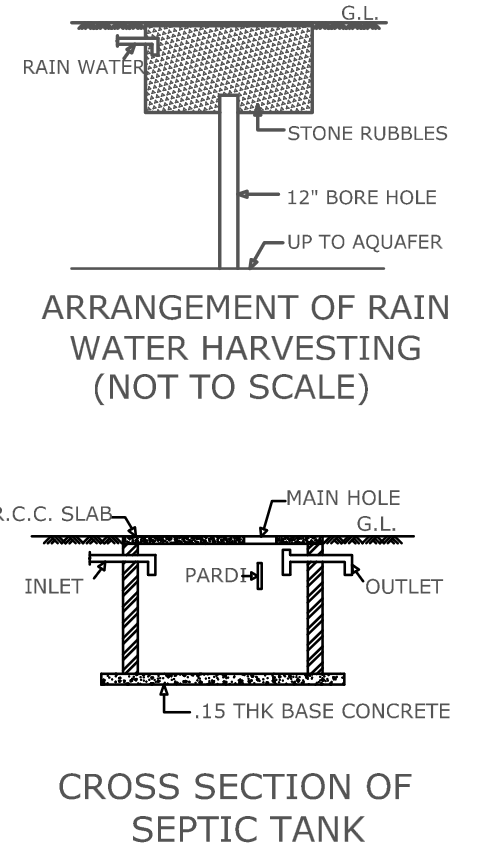
Review the service information required for the particular building and approval application.
Depending on the project and local authority requirements, this may include:
- Water supply arrangements.
- Sewer connection or approved wastewater disposal.
- Rainwater drainage.
- Rainwater harvesting provisions, where applicable.
- Electrical or other service layouts, if requested.
- Fire safety information for projects where it is required.
Check that service routes do not conflict with the building layout or other essential site arrangements. Ensure that any required tanks, pits or utility spaces are located and dimensioned correctly.
Do not add unsupported technical details merely to make a drawing package look complete. Include the information required for the actual project and have specialist systems reviewed by the appropriate professional where necessary.
10. Verify Drawing Notes, Symbols and Dimensions
A drawing may contain correct design information but still be difficult to review if its presentation is unclear.
Before submission, confirm that:
- All important dimensions are readable.
- Room labels and level markers are legible.
- Units are stated consistently.
- Symbols are understandable and used consistently.
- Dimension lines do not overlap important information.
- Line weights distinguish boundaries, walls and annotations appropriately.
- The title block contains the required project and professional details.
- North arrows, section markers and elevation references are correctly placed.
Review the drawing at the scale and paper size intended for submission. Text that looks clear while zoomed in on a computer screen may become unreadable when printed.
11. Confirm Documents and Professional Details
Drawings are only one part of a building plan application. Check the application requirements for the relevant local authority before filing.
Before filing your application, review our guide to documents required for building plan approval to check which supporting documents may be needed by your local authority.
Depending on the project, the required items may include:
- Ownership or property documents.
- Site survey or plot measurements.
- Application forms.
- Applicant identification or authorization.
- Drawings signed by the authorized professional.
- Professional registration or licence details, where required.
- Structural documents or certificates, where applicable.
- Relevant NOCs or supporting certificates, if required.
The list is not universal. Use the current official checklist for the authority handling the application and confirm the required file formats, signatures and submission method.
Before submitting your application, review the relevant authority’s document requirements and inspection procedures. For reference, the Odisha Government’s Building Plan Approval System provides official approval-related resources and site inspection checklists.
12. Perform a Final PDF and File Review
Before uploading or handing over the drawing package, inspect the actual files that will be submitted.
Use this final review:
All required drawing sheets are included.
The correct project and revision are shown.
The drawing sheets have the intended orientation and paper size.
No important dimensions or notes are clipped.
Text and linework remain readable in the exported PDF.
The plotted drawings match the latest approved internal revision.
Required signatures and seals are present.
File names and sheet numbers are easy to identify.
The application attachments are complete.
A copy of the final submitted package is retained for reference.
If the authority uses an online portal, confirm its current file-size, format and naming requirements. A technically correct drawing can still encounter submission problems if the uploaded file is incomplete or unreadable.
Common Issues to Resolve Before Submission
- Incorrect plot dimensions: Verify all plot measurements against the available site survey or property records.
- Missing setback dimensions: Clearly mark required setbacks and check local building regulations.
- Area calculation errors: Recheck plot area, built-up area, ground coverage and FAR calculations.
- Inconsistent drawings: Ensure floor plans, elevations and sections show matching dimensions and building details.
- Unclear parking layout: Check parking dimensions, vehicle access and circulation space.
- Missing drawing details: Add required labels, dimensions, levels, symbols and drawing references.
- Unreadable PDF files: Check text size, line weights, paper size and drawing clarity before exporting.
- Outdated drawing revisions: Make sure all sheets contain the latest coordinated design.
- Missing supporting documents: Verify the required application forms, signatures and certificates against the local authority checklist.
Final Review Before Building Plan Submission
A reliable pre-submission review should confirm three things: the project information is accurate, the drawings agree with one another, and the proposed design has been checked against the applicable regulations.
Rather than checking every sheet in isolation, review the drawing package as one coordinated set. Compare the site plan with the floor plans, compare vertical dimensions with the elevation and section, and independently verify the area statement. Then inspect the final exported files and supporting documents.
The exact submission requirements depend on the local authority, project type and applicable building regulations. A licensed or otherwise authorized professional should confirm compliance before the application is filed.
Frequently Asked Questions
What should I check before submitting building drawings?
Check plot information, site boundaries, setbacks, floor plans, building height, area calculations, parking, required services, drawing consistency and supporting documents.
Why should all drawings be cross-checked?
Different sheets describe the same building from different views. Inconsistent dimensions, levels or projections can create confusion and may lead to objections during scrutiny.
How do I check setbacks in a submission drawing?
Compare the proposed building position with the verified plot boundaries, dimension each required open space, and confirm compliance with the applicable local building regulations.
How can I verify the FAR calculation?
Divide the total floor area counted under the applicable regulations by the plot area. Confirm which floor areas must be included or excluded under the local rules.
Should the area statement match the floor plans?
Yes. The area figures should be traceable to the drawings and calculated using the same applicable measurement rules.
Are structural drawings always required?
Requirements vary by building type, project conditions and authority. Check the official submission requirements to determine whether structural drawings, calculations or certificates are needed.
Can I use the same submission drawing checklist for every city?
You can use a general checklist for quality control, but you must verify local requirements separately. Setbacks, height limits, parking rules, documents and submission procedures can vary.
Does a complete checklist guarantee building plan approval?
No. A checklist helps identify common omissions and inconsistencies, but approval depends on compliance with the applicable regulations, the submitted information and the authority’s review.