
Documents Required for Building Plan Approval in India: Complete Checklist
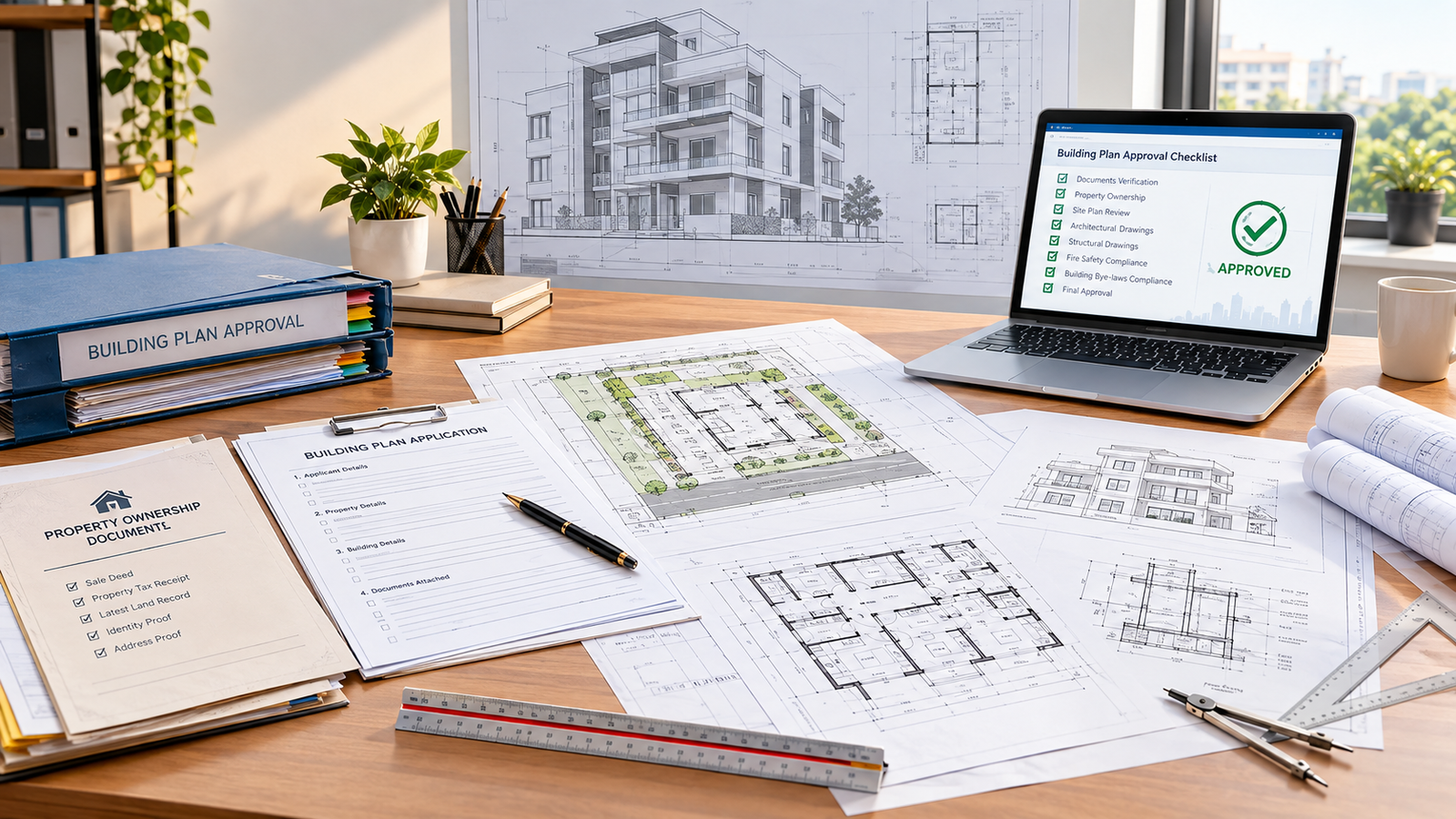
Before starting construction, one of the most important steps is to understand which documents are required for building plan approval. The exact requirements can differ between municipal corporations, development authorities, municipalities, and local bodies, so it is important to check the rules applicable to your property location.
A complete document file helps the authority verify the ownership, location, proposed use, and technical responsibility of the project. Missing or incorrect paperwork can lead to objections, additional submissions, or delays.
This guide explains the commonly requested documents for building plan approval in India and shows how to organize them before submitting an application.
Why Are Documents Needed for Building Plan Approval?
Building approval is not based only on the architectural drawing. The authority also needs supporting information about the property and the person responsible for the proposed construction.
Documents are generally used to verify:
- Ownership of the property
- Identity of the applicant
- Property location and land details
- Permitted land use
- Existing tax or property records
- Responsibility of the architect or engineer
- Structural safety requirements
- Special permissions or NOCs, where applicable
The purpose is to establish that the proposed construction can be considered under the applicable local development regulations.
Main Categories of Documents
Instead of treating every document as one long list, it is easier to organize the approval file into different categories.
The commonly required categories are:
- Property ownership documents
- Applicant identification documents
- Site and land-related documents
- Architectural and technical documents
- Professional certification documents
- NOCs and special permissions
- Project-specific supporting documents
Not every project will require every document. Requirements depend on the location, building type, plot conditions, and applicable authority.
1. Property Ownership Documents
The first group establishes the applicant’s legal connection with the property.
Common documents may include:
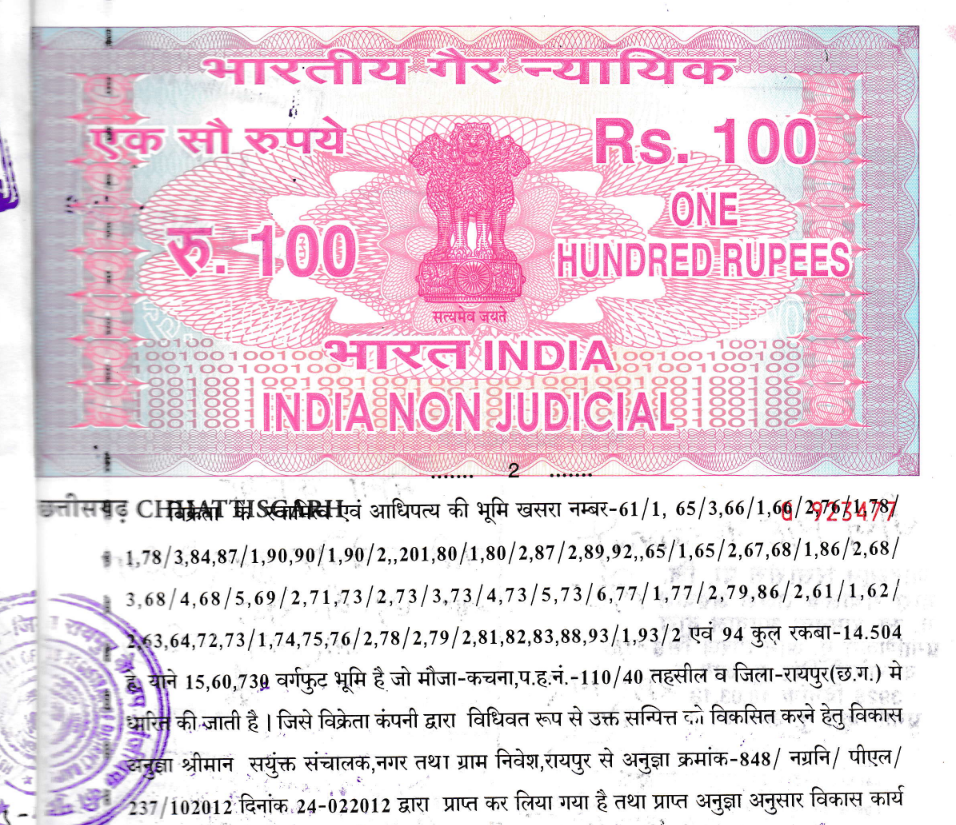
Sale Deed or Title Deed
A sale deed or title document is generally used as evidence of property ownership.
Registration Documents
Registered property or land records may be requested to verify the legal status of the plot.
Property Tax Receipt
A recent property tax receipt may be required as supporting evidence of the property’s municipal record.
Previous Property Documents
If the property has an earlier approved construction, subdivision, transfer, or permission record, previous documents may also be relevant.
Important: The exact ownership documents can vary depending on whether the property was purchased, inherited, transferred, leased, or developed through another legal arrangement.
2. Applicant Identity Documents
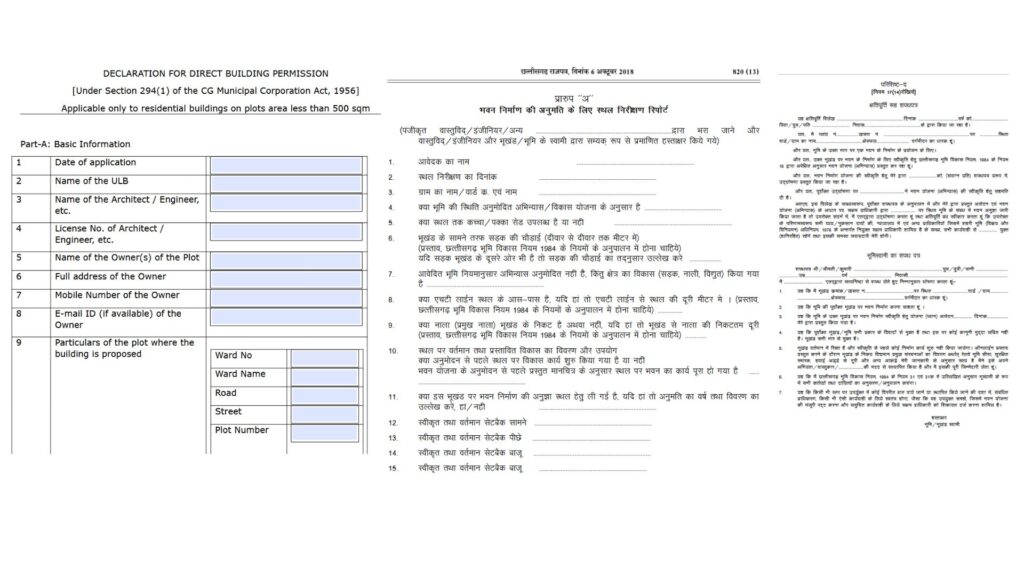
The authority may also require documents identifying the property owner or applicant.
Depending on the local application system, these can include:
- Government-issued identity proof
- PAN or other applicable tax identification
- Passport-size photograph
- Address or contact details
- Authorization letter, where someone is applying on behalf of the owner
For online applications, some identity information may be entered directly into the portal instead of being submitted as a separate physical document.
3. Site and Land-Related Documents
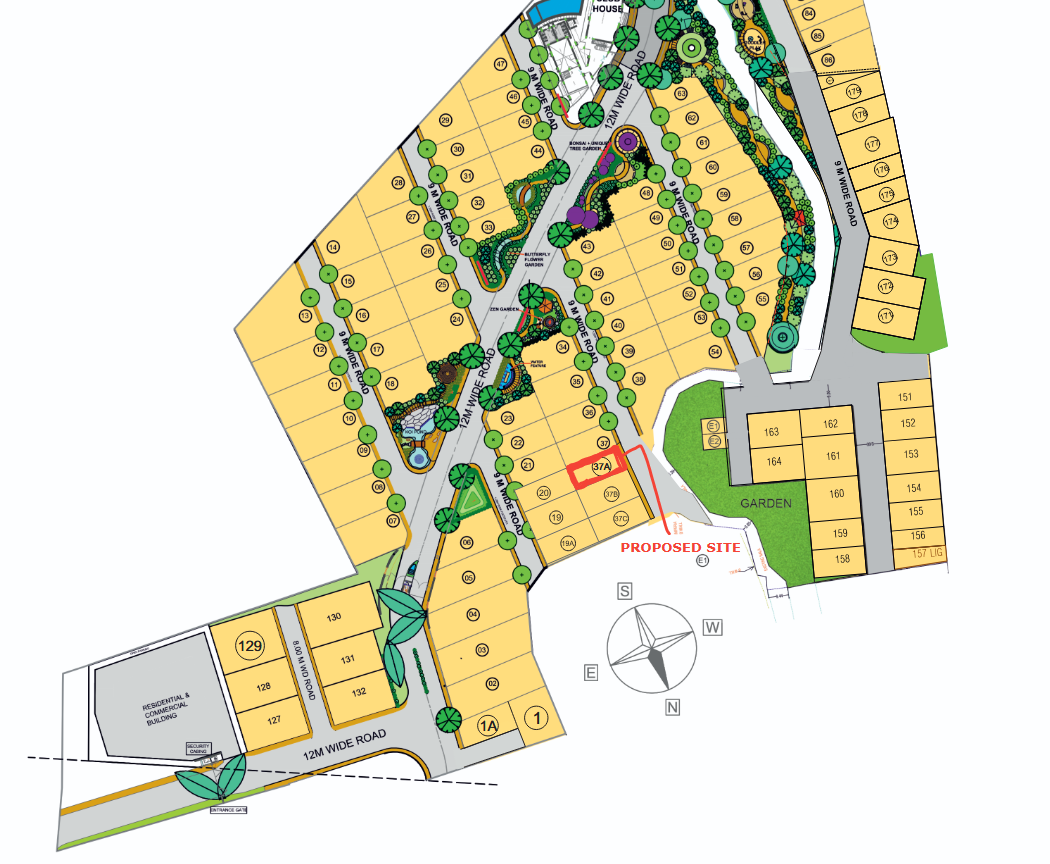
Property ownership alone does not provide all the information needed to evaluate a building proposal.
Site-related documents may include:
Location Plan
A location plan helps identify where the property is situated in relation to surrounding roads, streets, or important landmarks.
Site Plan
The site plan shows the relationship between the plot and the proposed building. It may indicate plot boundaries, road access, setbacks, open spaces, and other relevant site information.
The detailed drawing requirements should be prepared according to the applicable local regulations.
Land Use Information
The authority may verify whether the proposed use of the property is permitted.
For example, residential construction may require the plot to fall within an appropriate residential or mixed-use zone.
Encumbrance or Related Property Record
In some cases, an encumbrance certificate or similar land record may be requested to establish information about the property’s legal status.
4. Architectural Drawings
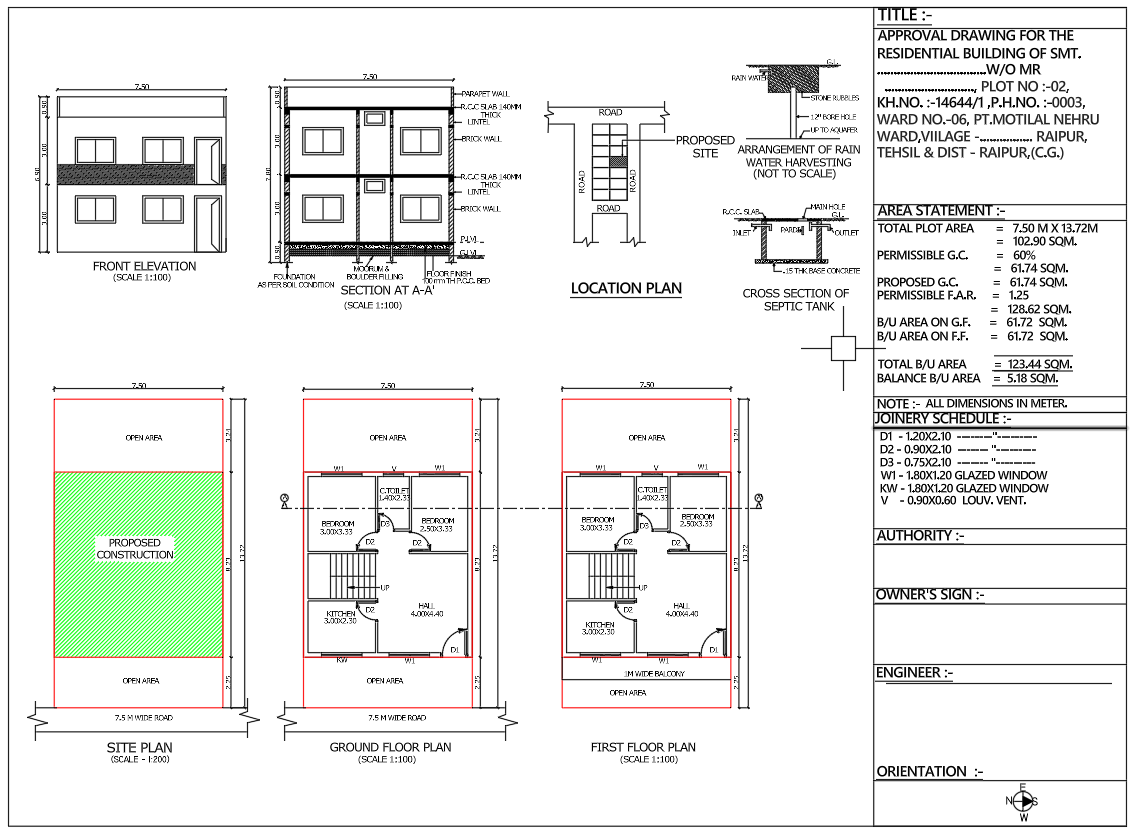
Architectural drawings form an important part of a building approval application.
If you want to understand the different drawings generally included in a residential approval submission, see this guide to residential building submission drawings.
However, the exact drawing set depends on the project and local authority.
Common drawings can include:
- Site plan
- Floor plans
- Elevation drawings
- Section drawings
- Parking layout
- Area statement
- Other drawings required by the authority
These drawings communicate the proposed building design and allow the authority to check relevant planning requirements.
For detailed information about preparing submission drawings, a separate article can be used rather than repeating the complete drawing procedure here.
For general building construction and safety guidance, readers can refer to the National Building Code of India published by the Bureau of Indian Standards (BIS).
5. Architect or Engineer Details
Where required by local regulations, drawings and applications need to be prepared or certified by an appropriately registered professional.
The application may require:
- Architect registration details
- Engineer registration details
- License or authorization information
- Professional declaration
- Signature or digital certification
The exact professional requirements depend on the type of project and the rules of the concerned authority.
6. Structural Safety Documents
For projects where structural documentation is applicable, supporting structural information may be required.
Examples can include:
- Structural stability certificate
- Structural drawings
- Structural engineer’s certification
- Soil investigation report
- Other structural documents specified by the authority
These requirements can become particularly important for multi-storey, large, or technically complex buildings.
A soil report should not be assumed to be mandatory for every small residential project. Its requirement depends on the project and applicable regulations.
7. No Objection Certificates (NOCs)
NOCs are not universally required for every building application.
They are generally connected to specific site conditions, building uses, locations, or project characteristics.
Depending on the circumstances, an authority may require approvals or NOCs relating to:
- Fire safety
- Airport or aviation restrictions
- Environment
- Water supply
- Sewerage
- Road access
- Heritage restrictions
- Other local departments
For example, a project located in a regulated area may require additional clearance that would not apply to an ordinary residential plot.
Therefore, it is better to check the applicable authority’s current NOC requirements before preparing the final application.
8. Documents for Existing Structures
If construction is proposed on a property that already contains a building, additional records may be relevant.
These may include:
- Previous building approval
- Existing sanctioned plan
- Completion-related documents
- Existing property records
- Previous alteration permissions
This information can help the authority understand the existing condition before evaluating the proposed modification or additional construction.
9. Project-Specific Documents
Some projects require additional supporting documents because of their size, use, or location.
Examples may include:
- Fire safety documentation
- Lift-related information
- Rainwater harvesting details
- Environmental documentation
- Parking calculations
- Utility-related documents
- Special authority permissions
These should be treated as project-specific requirements rather than universal documents for every house.
Documents Required for a Residential House Plan
For a typical residential building application, the basic file may commonly contain:
Property Information
- Ownership/title document
- Property registration details
- Property tax record, where applicable
Applicant Information
- Identity proof
- Contact details
- Photograph, where required
Site Information
- Location/site information
- Land-use details, where applicable
- Relevant property records
Technical Information
- Architectural drawing set
- Area calculations
- Professional certification
- Structural documents, where applicable
Additional Approvals
- NOCs or special permissions, if applicable
This is a general checklist. The final list should always be confirmed with the local authority handling the application.
How to Organize the Documents Before Submission
Preparing the documents in advance can make the approval process easier.
A simple organization method is:
Step 1: Verify Ownership
Check that the applicant’s name and property records are consistent.
Step 2: Collect Property Records
Keep the relevant sale, registration, tax, and land documents together.
Step 3: Prepare Technical Drawings
Ensure the drawings are complete, correctly dimensioned, and prepared according to the applicable rules.
Step 4: Confirm Professional Certification
Check whether the architect, engineer, or other professional needs to sign or digitally certify the application.
Step 5: Check Special Requirements
Determine whether the property or project requires any NOC, clearance, or additional report.
Step 6: Review the Application
Before submission, compare the document file with the current checklist provided by the concerned authority.
Once the required documents are organized, it is also important to understand the complete building plan submission process, from preparing the drawings to submitting the application and receiving approval.
Common Document-Related Mistakes
Many approval delays are caused not by the basic design but by incomplete or inconsistent documentation.
Avoid these common mistakes:
1. Name Mismatch
The owner’s name should be consistent across important property and application records wherever required.
2. Outdated Property Records
Using old or incomplete supporting documents can create unnecessary clarification requests.
3. Missing Professional Certification
Where certification is mandatory, the required professional details should be correctly provided.
4. Submitting Unnecessary Documents
More documents do not automatically make an application better. Submit documents relevant to the authority’s requirements.
5. Ignoring Local Requirements
A checklist used in one city may not be identical to the checklist used in another.
6. Not Checking Special Conditions
Corner plots, road widening areas, commercial projects, high-rise buildings, heritage areas, or properties near regulated zones may have additional requirements.
Are the Same Documents Required in Every City?
No.
Building approval is handled under local rules and procedures, so the required documents can vary according to the authority, location, project type, plot conditions, and applicable regulations.
For this reason, an online checklist should be treated as a starting point rather than a replacement for the current requirements of the concerned authority.
Before submitting an application, verify the latest checklist and submission procedure with the relevant municipal corporation, development authority, municipality, or other local body.
Building approval requirements can vary by local authority. For broader reference on building permit documentation and procedures, readers can also refer to the Model Building Bye-Laws published by the Ministry of Housing and Urban Affairs.
Documents vs Drawings: What Is the Difference?
Documents and drawings serve different purposes.
Documents establish information about the owner, property, permissions, and professional responsibility.
Drawings explain the proposed building design, layout, dimensions, levels, and other technical information required for review.
Both may be needed for a complete building approval application, but they should not be treated as the same thing.
Final Checklist Before Building Plan Application
Before submitting the application, review the following:
Ownership documents collected
Applicant identity documents ready
Property records checked
Site information verified
Architectural drawings prepared
Area calculations checked
Architect/engineer details provided
Structural documents arranged where applicable
Required NOCs identified
Project-specific documents checked
Application information reviewed
Current local authority checklist verified
Conclusion
Documents required for building plan approval depend on the property, project type, and authority responsible for granting permission. A residential house may require a relatively straightforward set of ownership, identity, site, drawing, and professional documents, while larger or specialized projects can require additional technical reports and clearances.
The safest approach is to organize the basic property and applicant records first, prepare the required technical drawings, and then verify the current checklist issued by the local authority.
Keeping the documentation accurate and consistent can reduce avoidable objections and make the building approval application easier to manage.
Frequently Asked Questions
What documents are required for building plan approval in India?
Commonly required documents include property ownership papers, applicant ID proof, property records, site information, architectural drawings, professional certification, and applicable NOCs or technical documents.
Is an ownership document required for building plan approval?
Yes, proof of ownership or legal possession is generally required so the concerned authority can verify the applicant’s connection with the property.
Are architectural drawings required for building approval?
Yes. Building approval applications generally require drawings such as site plans, floor plans, elevations, sections, and other drawings applicable to the project and local regulations.
Is an NOC required for every residential building?
No. NOCs are not required for every residential project. Additional clearances may depend on the property’s location, building type, height, use, and other specific conditions.
Is an architect's signature required for building plan approval?
Where required by the applicable regulations, drawings and applications need to be prepared or certified by a registered architect, engineer, or other authorized professional.
Are the same building approval documents required in every city?
No. Document requirements can vary between municipal corporations, municipalities, development authorities, and other local bodies. The current checklist of the concerned authority should be verified before submission.
What happens if a required document is missing?
A missing or incorrect document may result in an objection, request for additional information, or delay in processing the application. It is therefore useful to check the complete document checklist before submission.
How can I prepare documents for building plan approval?
Start by collecting ownership and applicant documents, verify property records, prepare the required architectural drawings, arrange professional certifications and applicable NOCs, and finally compare the complete file with the latest requirements of the local authority.